Our Blog

What Are Adjustments?

April 15th, 2020

If you’ve just gotten braces at our Arcadia, Chandler, Gilbert, or Phoenix, AZ office, you’ve probably also learned a whole new vocabulary. Malocclusion, brackets, archwires, ligatures, elastics—you’ve got the definitions down. But now you’re scheduled for an “adjustment.” What exactly does that mean?

Why Do I Need an Adjustment?

After all, you’ve just gotten braces! But the fact is, moving your teeth to their ideal location is a process that involves many steps. The brackets and wires you have today are only a starting point. Wires, and rubber bands if you need them, put gentle pressure on the teeth, gradually moving them into a better position. Every time we see you, we check the progress you’ve made and adjust your braces to move the teeth into even better alignment. It’s a careful process to make sure your teeth and jaws fit together perfectly for straight teeth and a healthy bite.

What Will Happen at an Adjustment?

Because your braces are made specifically for you, there is no one answer for everyone or even every appointment. Usually, your ligatures (the colorful bands around your brackets) will be removed, and often the orthodontic wire that is attached to your brackets will be removed as well. We’ll check to make sure you are brushing and flossing properly around your wires and brackets, and check on the condition of your braces.

Your wire might be adjusted, or bent, or tightened, or replaced all together. In the beginning, the wire will probably be more flexible. Later in your treatment, you might get a thicker, firmer wire to move your teeth more effectively, or we might bend a wire to move specific teeth.

If you need rubber bands to make sure your bite is in alignment, we’ll show you how to attach and take care of those. We’ll also look for other adjustments that might need to be made to your brackets. If you have any concerns about brackets, wires, or any other part of your braces, let Doctors Asgari, Cox, and Vu. know! And once we’re done adjusting your braces, this is your chance to change the color of your ligatures for a new look.

Will It Hurt?

You might suffer some discomfort in the hours after an adjustment, so treat yourself gently! Stick to soft foods for a few days, and treat yourself to something cold and soothing like ice cream, yogurt, or a smoothie. Brush gently if your teeth are sensitive. Usually, over-the-counter pain relievers will take care of any soreness. You can even take a pain reliever 30 minutes to an hour before the adjustment if you are expecting some discomfort. We have more great ideas on how to reduce any tenderness you might feel—let us know if we can suggest some.

Within a day or two, you should be back to normal. If you ever suffer serious discomfort, or if the soreness lasts more than a few days, give us a call.

Remember, each adjustment brings you closer to your goal—straight teeth and a healthy bite. And that’s the definition of a beautiful smile!

How to Floss with Braces

April 8th, 2020

The Sonoran Smile Orthodontics team knows that oral hygiene is important, whether you have braces on your teeth or not. But if you are a person who wears braces, caring for your teeth and gums can become somewhat challenging. Without daily oral hygiene practices, you may become prone to cavities and tooth decay during your time in braces.

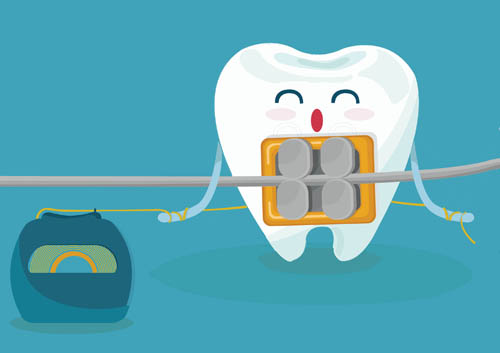
Naturally, you know that brushing your teeth each morning and night, as well as after you eat, will help keep your mouth healthy and clean during the months you wear braces. But flossing is also an important part of your hygiene routine. Flossing with braces can be tricky, but it’s not impossible. Doctors Asgari, Cox, and Vu., your general dentist, or your dental hygienist can help you become more comfortable and adept at flossing your teeth during the months you wear braces.

Flossing Tips for Those with Braces

  • Use Tools Provided by Our Office. A floss threader is a small, plastic needle that will help you floss between the wires and your teeth. Thread a 12-to-18-inch piece of floss onto the needle, and use the needle to get the floss easily behind the wires.
  • Flossing Under the Wires. Once the floss is behind the wires, use your hands to manipulate the floss. Move it up and down along the wires to remove food particles.
  • Flossing Between Your Teeth. Floss between your teeth as you normally would without braces. Move the floss up and down between your teeth, using a clean section of floss for each tooth.
  • After You Finish Flossing. Your orthodontist may have suggested that you use a water pik or proxy brush after you finish brushing. Either of these tools will help remove any loosened food particles to ensure that your teeth and braces are clean.

Continue Good Oral Hygiene Habits

Good oral hygiene habits you use while wearing braces will help you achieve the beautiful smile you and the Sonoran Smile Orthodontics team have been working toward. Once your braces are off, it may be tempting to slack off on the brushing and flossing. Don’t let yourself fall into any habits that will have a negative impact on your oral health or the attractive smile you waited for throughout the months you wore braces. See your general dentist for regular cleanings, and continue to brush and floss your teeth each day.

How Braces Can Work at Any Age

March 4th, 2020

Are you an adult who is considering getting braces? Perhaps you’ve had them before, but over the years that dental work has been reversed. Or maybe you’ve never had any orthodontic work done, but are considering braces for the first time. In either case, Sonoran Smile Orthodontics can help you enjoy straighter teeth, an improved bite, and a more beautiful smile. If you are considering getting braces, here is what you need to know about adult orthodontic work from Doctors Asgari, Cox, and Vu..

Can braces work for adults?

Absolutely! Braces work for just about anyone. However, there are several different types of braces, and not all of them may work for you. Different types of orthodontic treatments include:

  • Ceramic braces
  • Metal braces
  • Self-ligating brackets
  • Lingual brackets (braces behind the teeth)
  • Invisible braces
  • Rubber bands for bite correction
  • Headgear and other appliances

By scheduling a consultation, we can determine which treatment or combination of treatments would be best for your specific needs.

How do I get started?

Getting braces can be a little bit daunting. At first glance, the process may appear expensive and time-consuming. However, if you take it step by step, getting braces can be a simple and relatively pain-free experience. Here are the first steps you need to take to get on the road to straight teeth:

First, you need information. If you are nervous about getting braces, or are having trouble getting started, learning more about the process can help ease your mind. Here are a few sample questions to ask:

  • What kind of braces do you recommend for my teeth?
  • How long will the treatment take?
  • How often will I need to come in for adjustments?
  • What is the total cost of the treatment? Do you accept insurance? Will you require the full amount up front, or do you have payment plans?

Asking these types of questions will help you understand what to expect during the entire process, which can aid your decision on the proper course of action.

The next step is to complete any prerequisite treatment. During your first meeting with Doctors Asgari, Cox, and Vu., we’ll need to take some X-rays and molds of your teeth, and then help you determine an appropriate treatment plan. Recommendations may include some preliminary dental work before you get your braces, which can be an important step in making sure your orthodontic treatments are effective.

Once you have completed these steps, you are ready to get started! After you’ve chosen a treatment plan and undergone any necessary prerequisite dental work, you’ll be able to get your braces. Just like that, you’re on your way to a better smile! If you’d like to get started right away, call our Arcadia, Chandler, Gilbert, or Phoenix, AZ location today!

Proper Diet while Undergoing Orthodontics

February 26th, 2020

Many people undergo orthodontic treatment during childhood, adolescence, and even into adulthood. Wearing orthodontic appliances like braces is sure to produce a beautiful smile. Though orthodontic treatments at Sonoran Smile Orthodontics are designed to accommodate your lifestyle, chances are you will need to make some dietary modifications to prevent damage to your braces and prolong orthodontic treatment.

The First Few Days with Braces

The first few days wearing braces may be the most restrictive. During this time, the adhesive is still curing, which means you will need to consume only soft foods. This probably will not be a problem, however, as your teeth may be tender or sensitive while adjusting to the appliances.

Orthodontic Dietary Restrictions

You can eat most foods normally the way you did without braces. However, some foods can damage orthodontic appliances or cause them to come loose. Examples of foods you will need to avoid include:

  • Chewy foods like taffy, chewing gum, beef jerky, and bagels
  • Hard foods like peanuts, ice chips, and hard candy
  • Crunchy foods like chips, apples, and carrots

How to Continue to Eat the Foods You Love Most

Keep in mind that you may still be able to enjoy some of the foods you love by making certain modifications to the way you eat them. For example, steaming or roasting carrots makes them softer and easier to consume with braces. Similarly, you can remove corn from the cob, or cut up produce like apples and pears to avoid biting into them. Other tips include grinding nuts into your yogurt or dipping hard cookies into milk to soften them. If you must eat hard candies, simply suck on them instead of biting into them.

If you have any question whether a food is safe to eat during your treatment with Sonoran Smile Orthodontics, we encourage you to err on the side of caution. Of course, you can always contact our Arcadia, Chandler, Gilbert, or Phoenix, AZ office with any questions you have about your diet and the foods that should be avoided during treatment. By following our dietary instructions and protecting your orthodontic appliances from damage, you will be back to chewing gum in no time.

Back to Top
Sonoran Smile Orthodontics Powered by ZocDoc Doctor Directory